Wednesday, April 17, 2013

Evaluating Sources (Extra Credit)

In this blog post I was told to find a critical source that would make an argument about my field of chemical engineering. I found a source about balancing work with family. The critic talks about how nontechnical or traditional jobs have such a different stance than their counter part of more technical jobs like chemical engineering. I found this quite fascinating to see the difference between them. The critic argued that nontechnical or traditional jobs were not as willing to let their workers have more flexible jobs hours.

After reading the whole source and getting a sense of where the critic was coming from I was able to see the big picture. The critic's argument showed how traditional jobs in the work force were very stern about their policies on giving their workers a more flexible job to go and take care of their child. They felt that give more flexible jobs were given to their workers it would harm the company in the long run due to costs and production. On the other hand technical jobs have already taken a step forward and thought ahead of their counterparts and allowed their workers to have more flexible job hours. This made it possible for a family member to go and take care of a child while still working, just at a different location. In a survey workers preferred companies that were willing to give flex-time to their workers. By the looks of it, many work places are changing their old habits and going in a different direction to allow people to have more flexibility and time with family if needed. The critic is right about how traditional jobs look at their work force as a company that needs as many people to work at a time, but it is sometimes necessary to be open and allow for a little bit of freedom to roam.


Citation: "Balancing Work & Family." Chemical Engineering 99.4 (1992): 147-. ProQuest. Web. 17 Apr. 2013.
N.d. Photograph. n.p. Web. 17 Apr 2013. <http://www.arma-nova.org/programs.htm>.

Monday, April 15, 2013

Reflecting and Researching

For my last and final blog post of the year I was told to reflect on my journey throughout the whole semester about my field and what I have learned by exploring my field. From the bigger picture that I can see right away, I feel like I have gone leaps and bounds just by learning more about what chemical engineering really is about. Also, by having this blog post many hours have been spent on finding researching different ways renewable energy is being utilized today. It is quite interesting to see how far I have gone from the beginning of the semester to where I am right now. As I reflect back on this blog and its whole process here are my top three things I have learned about my field and about myself as a researcher.

The top three things that I have learned about my field of chemical engineering are as of right now the most efficient way to obtain renewable energy is through wind power, there is actually many more ways of finding renewable energy other than the obvious ones like sun, water, and wind,  and lastly chemical engineers play a big part in the foods we eat. It is quite fascinating to see how far I have been able to dig in the world of chemical engineering. I never knew that there can be so many different parts in this field and each field has its own affect on human kind.

Throughout the whole semester I have learned a lot of who I am as a researcher. The top three things that I have learned as a researcher is that to have good evidence for my research paper I need to have multiple sources to backup my claims, working in advance on my research helps me be able to pick out the most appropriate sources that bolster would my essay, and finally analyzing the research that  I have found with the knowledge I have gained from all the research. All three of these keys have helped me understand how to write a good college research paper. The more evidence I have to back up my claims the better it will be for the audience to see where I am coming from.

After all this research and really finding out what chemical engineering really is there are still a couple of questions that loom in my head that I have yet to be able to figure out right now. Here are some of the questions that I would like to find out in the future. What is the most optimal way to convert solar rays into renewable energy? Why is it so tough to only rely on renewable energy? How long will it take for more of the world to switch over to renewable energy and rely less of fossil fuels and gasoline? Hopefully in my future education at MSU will help me explore and understand these questions that I still have. Reflecting on my journey so far, I feel that I have really been able to explore in depth about chemical engineering and it makes me feel good about the path I have chosen so far. There is a lot that the future holds indeed!

Sunday, April 14, 2013

Converting Heat into Electricity

In this video Dr. Morelli talks about how heat from the sun is transfered into electricity through his research. It is really fascinating to see how just the sun's rays can be turned into energy and then be used by people instead of gasoline or coal. The video really goes in depth about how the process works and the reasons why he is doing this research. I think the more research that we can do about finding different ways to contribute to renewable energy, it will be a giant leap for the whole world. The less fuel and harmful gases that are used on this planet the more it can slow down the global warming as a whole. Dr. Morelli's research is really interesting to see what types of tools he has built to capture as much energy from the sun as possible and then be able to convert the optimal amount of heat into energy. The research that Dr. Morelli is conducting can be a break through in renewable energy for the future. The really neat thing about it is, the research is done on our very own campus at Michigan State University.

Citation: N.d. Photograph. YoutubeWeb. 14 Apr 2013. <http://www.youtube.com/watch?feature=player_embedded&v=o7ayPf8qeP4

Wednesday, April 10, 2013

Practicing Your Knowledge

For this weeks blog post I was to identify and attempt a hands-on experience. The past couple of weeks I have had the privilege to work on a engineering project with our group to build a device that would explain, to a visually impaired person, why a ladder will not slide when force is put upon it. Our group brain stormed ideas to see what would work best to explain the idea behind it. Our group chose to create a small replica of a wall, flat surface, and a ladder. The flat surface would have two different types of friction on it, one side with sand paper and the other with nothing at all. The building process took up to a week or so to finally come up with a compact friendly design that the visually impaired person can carry around with themselves. This project really opened up my eyes as a engineer and to see what I am really capable to doing in the futre. A simple thing like building a device to showcase friction, is mind blowing to me because of how powerful the mind is when thinking about different possible ideas.

This whole hands on project gave me a new perspective. There is quite the difference between a hands-on learning and learning from written/ spoken sources. Hands-on learning allowed me to be able to freely think about how I can approach the project. The big thing was the ability for me to use trial and error. This allowed our group to learn about what would be best for the customer. Learning from written sources on the other hand makes the reader have to interpret another persons ideas to see what is best fit for the certain situation. Written sources also gives you the ability to look at a different perspective from another person. There are always pros and cons of hands-on learning and from written/ spoken sources. It really just depends on how the person approaches the project to see what best fits for them at that certain time.

After attempting a hands-on experience that allowed me to learn more about my field, I felt that it is more beneficial for me to physically see what is going on in action. As a hands-on type student if I am able to see what I need to do on a project I can better asess the situation. For this experience it was much better to be hands on than trying to learn from written/spoken sources. There will be times that it is more beneficial to learn from written/spoken sources, but for this engineering project it was best to physically be hands-on with the building process. This allowed me to learn more about the project as a whole and understand the problem that I needed to solve. 

Are Electric Cars Really Eco-Friendly?

Many car companies now are trying to go green for the future. Companies are trying to create electric cars for the consumer who is really into eco friendly technology. The question is still, are electric cars really eco-friendly? One would think that electric cars are the best types of cars to drive because it runs on electricity, but on the contrary the energy that is given to the car is from power plants. When a electric car is being charged up at home or at a station, the energy comes from power plants that run on coal. Not many people really know where the energy comes from, just because the car maybe running on electricity the energy has to come from somewhere. The article I read about really talks about how green an electric car is. It is quite fascinating to see that even though one maybe driving an electric car and thinking they are saving the planet. There is still a problem deep down that engineers and companies are trying to fix by producing more eco-friendly renewable energy that does not create carbon dioxide into the atmosphere.


Site:
http://www.nytimes.com/2012/04/15/automobiles/how-green-are-electric-cars-depends-on-where-you-plug-in.html?pagewanted=1&_r=2&hp

Citation: Electric Deal: Certain Nissan Leaf Dealers Offering Nearly $10,000 in Lease Cash Incentives . N.d. Photograph. Motor Trend Web. 10 Apr 2013. <http://wot.motortrend.com/electric-deal-certain-nissan-leaf-dealers-offering-nearly-10000-in-lease-cash-incentives-308223.html

Wednesday, April 3, 2013

Chemical Engineering in Food

Chemical engineers are a integral part of everyday. Over the years chemist have discovered and modified different fertilizers and pesticides to help better the growth of the food we eat. In the past a chemist named Fritz Harber engineered a process that would create ammonia between hydrogen and nitrogen. The process would help with a big amounts of ammonia that was used and still are in use as fertilizer. The process that Harber discovered would change the world forever by creating a direct impact on sustainable food production all over the world.

Chemical engineers have also made a major impact on the production of food. They have found effective ways to discard and help fight against the growth of weeds, insects, and other pests. By creating such great chemical compounds for commercial use, many companies have been able to grow food by the masses which give all of us food to eat. Chemical engineers have had their hand in many integral parts whether you know it or not. Before reading this article I never knew chemical engineers played such a big part in food. It is great to see how chemical engineers are making such a impact on the world of food.

Citation:
"Growing Food." n. page. Print. <http://www.chemicalengineering.org/food/growing.html>.

Sunday, March 31, 2013

Remixing Knowledge

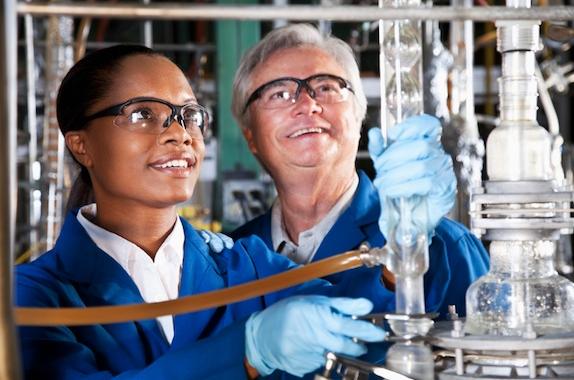
This week for my blog post I was told to find a source that was created by a professional in my field of chemical engineering this is essentially a remix. I found a site called American Institute of Chemical Engineers. This site is made up of all chemical engineers from all over the world. The site is considered a membership only site for chemical engineers, so you would need to login to be able to fully access all the information it has to offer. This site is great because it allows chemical engineers from all over the world to interact with each other and provide research to all the members. This creates a community of chemical engineers who are willing to help each other out to better the world for the future. The site has many tid bits about what this organization is doing to help better expand the chemical engineering field.

I will now break down this website through the use of RAIDS. Revision of this website would be what does it mean to be a chemical engineering professional? Also another revision about this website would be what are some benefits this organization can give to a chemical engineering professional. Arrangement of the website is broken down into different parts of the organization into two columns. It highlights the main points of why a chemical engineer professional should join the organization. The invention for this website is chemical engineers have their own big named organization and chemical engineers are willing to put all their research and ideas onto a website for other chemical engineers to look at. The delivery of the website is very clear, crisp, and right to the point. The website breaks down the most importan aspects to entice a chemical engineer to join their website. The website provides little descriptions about each category to really make sure that when a chemical engineer reads their material, they will get a understanding of what the institution is try to accomplish. The style of this website is straight forward. The American Institute of Chemical Engineers tell you exactly what they are doing and how it can help the chemical engineer who is in need of connections or a way to talk with different employers.

The audience that this website is targeting is mainly chemical engineering professionals. The purpose of the website is to entice as many chemical engineering professionals to join their organization because they have so much to offer to each and every engineer. The comprehensive site allows chemical engineer professionals to interact with one another and with other employers. This organization makes it much easier for chemical engineers to network with not just people in the close community, but with a larger community of chemical engineers all around the world. The overall success of its rhetoric is phenomenal, this website touches upon everything that a chemical engineer professional may be looking into. The access that a chemical engineer is able to have through this website is beyond what a professional can imagine. This organizations website did a very good job with how they are trying to get more chemical engineers to join their site. 

Citation:
"About." American Institute of Chemical Engineers . n. page. Print. <http://www.aiche.org/about>.
About. N.d. American Institute of Chemical Engineers Web. 31 Mar 2013. <http://www.aiche.org/sites/default/files/styles/aiche_content/public/images/overview_page/about_image_chemical-engineers-in-plant-iStk_0.jpg>.

Wednesday, March 27, 2013

Teenage Girl Creates Sustainable, Renewable Algae Biofuel Under Her Bed


A teenager name Sara Volz was able to create renewable fuel in under her bed. That is phenomenal because not many people can just think of using alge to create renewable fuel. She was able to create renewable oils from the alge to be used as a way of sustainable fuel. It is amazing to see people at such a young age looking for alternative ways of energy. The scholarship that she won will allow her to open the world up to others about a renewable source of energy. A new thing that I learned from just reading over this remarkable post is that alge can be a source of fuel. I never knew that it was possible. It is really awesome to see that teens and not just scientist are finding new ways to obtain renewable energy. If people are able to work together and formulate a better solution for the future, it would help this planet tremendously especially in the future. What do you think about Sara's accomplishments?

Link:http://www.extremetech.com/extreme/151087-teenage-girl-creates-sustainable-renewable-algae-biofuel-under-her-bed

Citation: Plafke, James . Teenage girl creates sustainable, renewable algae biofuel under her bed. N.d. Extreme TechWeb. 27 Mar 2013. <http://www.extremetech.com/extreme/151087-teenage-girl-creates-sustainable-renewable-algae-biofuel-under-her-bed>.

Noting Cultural Assumptions

In this weeks blog post I looked for a portrayal of my job in popular culture. I am looking to be a chemical engineer, but trying to find specifically chemical engineering in popular culture was a little difficult. So I went in the route of looking at engineers in general. For my popular culture portrayal, I chose a youtube video about Dilbert. The video describes the curse that engineers get called the "Knack". Dilbert is the engineer and he explains to his dog what it means to how he got the "Knack" as an engineer.

The cultural assumptions that are portrayed in the video is that all engineers like to take apart machines and put them back together to make them work. The video shows how engineers are always looking for ways to make things work a lot easier for them. Also the assumption is that all engineers are smart and are able to figure out how to fix a broken machine right away. The video shows how Dilbert as a young boy is able to fix a machine while he is at the doctors office, but no one else is able fix. Popular culture views engineers job as jobs that cause people to be disconnected with the normal world. The "curse of the engineer" as Dilbert puts it is that engineers can not live a normal life like other people do. Popular culture makes engineers look like all they really do is work in labs or do there own thing and never really interact with people. Many cultural assumptions are portrayed in popular culture are totally differently from how people actually act and do their jobs in the real world. Engineers do have tough jobs, but popular culture at times seems to stretch the idea "that engineers can not live a normal life like others" too much.


Thursday, March 21, 2013

Solar Energy Used In Tanzania


Solar energy is expanding in my different directions. It has now expanded all the way to Tanzania, Africa. This is a great thing because a lot of countries are moving towards becoming a greener country. By having solar energy in their own country they can finally be moving towards their goal. There is currently a policy in Africa called Renewable Energy Feed-in Tariff which allows the country to harness solar energy. By allowing this policy to pass it can open a whole new world for solar energy use in Africa. A new thing I learned from reading this news article is that solar energy is expanding all over the world. This is a very good step forward in trying to use less coal or oil to power homes or buildings. Even though it may seem like some cities in Africa do not need a lot of energy, it is the meaning behind trying to have a solid solar grid around the cities that counts. Solar energy can be stored for later use, but if coal or oil just happens to run out then having solar energy as a back up can come in handy. Hopefully in the near future Africa can rely on solar as their number one source for energy. 

Citation: 
Dobson, Richard. Mama Sara Obama at Solar Panels Installation in Kenya. N.d. n.p. Web. 21 Mar 2013. <http://www.greenpeace.org/africa/en/Multimedia/photos/Name-goes-here/>.
"Tanzania Encouraged On the Use of Renewable Energy."allAfrica. n. page. Print. <http://allafrica.com/stories/201303200164.html>.

Thursday, March 14, 2013

Contemplating Controversy

This week for my blog post I will be finding out about a controversy that has happened in the chemical engineering field. A report from the site called Forbes talked about how news medias are reporting stories for the sake of getting good ratings. There are also researchers out there that are using some information from their research to provide results about the type of research that is going on, but it is only a small portion that suggests the answer to the bigger research question. Researchers are doing this so that they can be able to obtain more grants to continue their research.   

            Many times consumers are mislead by researchers because of what the media puts out or what researchers want the world to see. The controversy that arose in the chemical engineering field is the link between the chemical BPA, also called bisphenol A, and obesity in children. This was an example of bad news reporting and also bad science by the researchers. The way researchers tested BPA levels of these kids were through urine samples. They seemed to have found links that there are high levels of BPA in their diets, but there were no inclusive evidence that BPA leads to obesity or weight gain. “They did find a correlation among white children and teens, but not with blacks or Hispanics – a strange and unexplained result (Miller).” The test was not able to show the link between BPA and obesity.  

Another test was done on monkeys to show that BPA would cause birth defects and miscarriages. Basically test monkeys were given continuous BPA capsules. The capsules would enter their system and it showed that the high levels of BPA caused birth defects. Researchers and news reporters would let consumers know about such research. Since the monkeys were given direct amounts of BPA to be put in their system the studies indicated higher levels of the chemical in their system. In reality consumers will never really be exposed to such high levels of BPA that the monkeys endured. This stirred up a major controversy in the field.

The main side of the issue is that media has a great influence on what consumers see and hear. They are able to at times dictate how the consumer will react to a story, like the controversy above. Even researchers have some influence on the consumers with the type of research that they do on a daily basis. The studies that they have done on BPA made consumers much more on their toes than what the real results states.

Citation:
Miller, Henry . "The Controversy Around BPA: Bad Reporting On Bad Science." Forbes. n. page. Print. <http://www.forbes.com/sites/henrymiller/2012/10/10/the-controversy-around-bpa-bad-reporting-on-bad-science/>.

Sunday, March 10, 2013

How Wind Energy Is Used Today


This week I have provided a in depth youtube video about how wind energy is transformed from wind into energy. This video really dives deep into how wind energy is being used in the modern world. These are the little steps that are being taken to move towards the use of renewable energy. A new thing I learned about wind energy from this video is that wind energy is able to power homes not only in the vicinity of the giant generators, but also homes that may be miles and miles away from the towers. With so many places in the United States that are able to generate natural wind more and more of these propellers are being built up so that they can collect the wind and transform it into energy for later use. With so many states with vast majority of land, why do we not just build more and more of theses towers to try to collect more energy?

Citations: N.d. YoutubeWeb. 10 Mar 2013. <http://www.youtube.com/watch?v=iTyMImpNWyY>.

Thursday, February 28, 2013

Reading Artifacts


Critical Reading

Preview: A bunch of panels laid out in rows.

First Impression: So many solar panels can be laid out in such a confined area.

Close Reading

Key Ideas: Solar panels are laid out pointed toward the sun to obtain optimal energy. The more solar panels there are, the more energy that can be absorbed and stored for later use.

Connections: Solar panels are like sponges of energy. They first intake the solar rays and through its technology in the panels the energy is converted into useable energy for homes and buildings.

Questions: With the amount of solar panels shown, how much energy can be produced from just one day of sunlight? Is this an optimal way of using solar panels to obtain energy?

Summary: With sunlight being the main source of energy for these panels, it is very important that these panels have an open area where the sunlight can be absorbed. The panels are laid out in rows to best intake the suns rays so the energy can be converted for later usage.

Critical Response

Key Question: Which type of solar panel is used to produce the most energy?

Detail Analysis: With different types of solar panels out there, suppliers give people choices to make about which panel they want. Each panel probably has a different energy intake and production.

Interpretation: Due to different types of panels giving off different amounts of energy, for optimal energy production engineers should find ways to enhance the process. The higher the production of energy absorbed by the panels the more energy that will be produced that can be used.

Synthesis: Chemical engineers are finding ways to optimize the usage of one solar panel. If their research is able to find a type of solar panel that is at a 90% or above conversion rate of energy then the solar panel will be very productive for the future.

Final Synthesis: Even with different types of solar panels, there are engineers out there that are working on optimizing each solar cell to convert energy absorbed into useable energy for the future. Once engineers are able to convert the solar rays that are absorbed to 100% energy conversion then more homes and companies can rely on solar energy. For now only a part of solar energy can be relied on because not 100% of the energy is converted fully. 

This artifact can teach people about chemical engineers because as of right now there are many chemical engineers doing research to find out how each solar cell in a solar panel can be enhanced for optimal usage. Chemical engineers are very in to finding new ways of obtaining renewable energy. Solar panels are a way to take the rays thats are given to the world naturally and convert that ray into energy. There are many chemical engineers that are not only trying to find new sources of renewable energy with solar panels, but also in biomass, large bodies of water, and wind.

Citation:
NSU Launches Sustainable Solar Energy Project at John U Lloyd Beach State Park. N.d. Nova Southeastern University, Fort Lauderdale-Davie. Web. 28 Feb 2013. <http://nsunews.nova.edu/nsu-launches-sustainable-solar-energy-project-john-lloyd-beach-state-park-2/solar-panels-1/>.

Wednesday, February 27, 2013

Geothermal Energy

Geothermal energy is another type of renewable energy that engineers take into account. Geothermal energy is special in the sense that the energy is obtained from the heat from the earth's core. Many big named companies are using geothermal energy as a way of producing renewable energy for our planet. A new thing that I learned about geothermal energy is over the years water seaps into the earths crust. The water under the crust will later be heated from the core and then changed into use as energy. Below is a attacthed video describing how exactly geothermal energy is created. Is it possible to only rely on geothermal energy for the future or do we need to find other ways to use renewable energy?


Citaion:
N.d. YoutubeWeb. 27 Feb 2013. <http://www.youtube.com/watch?v=Bl-oxDZDfqI>.

Tuesday, February 26, 2013

Hydroelectric Power

With so many different types of renewable energy out there, hydroelectric power is one of the many very accessible energy sources on this planet. This planet has many big bodies of water which makes it great to collect energy through dams. I learned that near large bodies of water dams are built to flow water into the dams so that energy can be collected. It is quite unique that something like water can be converted into energy. With so many large bodies of water why can we not have more renewable energy from these generators and dams? Below is a video explaining in detail how a hydroelectric dam works.


Citation: N.d. YoutubeWeb. 26 Feb 2013. <http://www.youtube.com/watch?feature=player_embedded&v=cEL7yc8R42k>.

Thursday, February 21, 2013

Wind Energy


Here is a video I found quite interesting on youtube. The video talks about how wind can be converted into energy that we can use in the future. What I learned after watching this video is that energy is actually quite hard to store up. I never knew that once the energy is captured from the turbines that if it is not stored it is gone. Luckily there are engineers out there who are able to find new ways of storing the energy in specialized batteries. It is great to know that there are engineers out there that are going towards using a natural resource that is already out there to harness its energy. Being able to use renewable energy is very key for us in the future because this will lower the carbon foot prints that we exert on our planet. Do you think that having more wind turbines set up all over the world is a better thing for the future? 

Citation:
Energy 101:Wind Turbines. N.d. YoutubeWeb. 21 Feb 2013. <http://www.youtube.com/watch?v=tsZITSeQFR0>.

Observing Community


Quite recently I was able to attend an engineer event for chemical engineers. The event included many students and a group of five engineering professors specifically chemical engineers. This event was held to give a glimpse to students about the life of a chemical engineer could be like and what type of research these professors are doing right now.
            The event started off with each professor introduced themselves and explaining the type of research that they are currently working on. As a student siting in my seat and listening to each professor articulate about his passions of finding renewable energy and new types of medicine were really fascinating. I slowly began to see how dedicated each of these professors were to their research and to the community of chemical engineers. Later in the event, after the presentations, all the students got a chance to meet up with any professor that they wanted to talk with. As I was waiting to go and chat with professor Lunt, I slowly observed how chemical engineers interact with their own peers and to students.
            I could tell from my observations, when chemical engineers talk about their research to other chemical engineers a lot of what they talk about is details on their finds. The community of chemical engineers is very studious, dedicated to their work, and hardworking. Each professor is unique in how they view the world of chemical engineering, but at the end of the day each chemical engineer is always trying to find ways to better the world.
            After observing the chemical engineer community, I was quite intrigued at how they do things. Some of the cultural conclusions that could be drawn about a chemical engineer is that all they do is wear a lab coat and just work in a lab twenty four seven. That is not necessarily true, even though chemical engineers who do research in labs may have to abide by those rules, there is a bigger picture that they need to fulfill. A good portion of the time when a chemical engineer works they are writing reports on their findings. There are a lot of things that chemical engineers do that do not get broadcasted to the public. So for most of what the general public sees is a clear-cut chemist who works in a lab all day.